
TL;DR
When comparing traditional marketing vs. digital marketing for dealerships, the biggest difference is what each approach is designed to accomplish.
Traditional dealership marketing is effective for building awareness, but digital inventory marketing is better suited to reaching shoppers who are actively looking for specific vehicles.
The strongest dealership marketing strategy uses traditional channels to build the dealership brand, and digital channels to connect vehicle-level inventory with high-intent shoppers.
What Is the Difference Between Traditional and Digital Dealership Marketing?
Dealerships have relied on traditional marketing for decades, whether it’s TV, radio, billboards, print and direct mail. And those channels can still be highly effective at building awareness as they promote a dealership’s brand.
But today, the car-buying journey starts online. Up to 83% of car shopping journeys include online research. The number jumps higher the younger the buying audience is: A Snapchat study of Gen Z buyers showed that 91% of consumers in this demographic use digital sources during their vehicle shopping.
The reality is that most shoppers start with the car in mind, not the dealer they want to buy it from. One study found that only 7% of shoppers knew which dealer they wanted to buy from. Shoppers search for makes, models, features, prices and available vehicles before they ever set foot in a dealership.
So it’s important to ask yourself: Is your dealership marketing strategy built around how people actually shop for vehicles today?
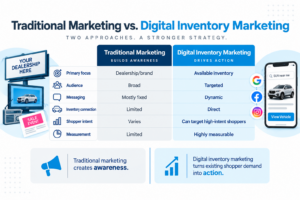
The biggest difference between traditional and digital marketing is in what it’s meant to accomplish:
Traditional dealership marketing builds awareness of the dealership, its brand, promotions or sales events.
Digital inventory marketing goes further by connecting shoppers directly with specific vehicles currently available for sale.
That difference matters because today’s shopper is likely not searching for a dealership, but for a particular vehicle that meets a specific combination of needs, features and price. That means your goal should be to direct shoppers to a vehicle description page (VDP) where the likelihood of conversion is much higher. Digital marketing alone gives dealerships the ability to meet that shopper at the inventory level.
Let’s look at how.
How Does Digital Marketing Help Dealerships Sell Inventory?
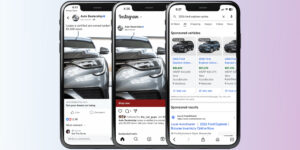
Digital marketing lets dealerships target shoppers based on their intent and then connect advertising to available inventory.
An inventory-driven digital marketing strategy can:
Promote specific vehicles or groups of vehicles
Reach shoppers searching for relevant makes and models
Adjust campaigns as inventory changes
Prioritize aging or high-opportunity inventory to meet OEM requirements
Highlight vehicle pricing, features and availability
Measure shopper engagement and campaign performance
Instead of relying entirely on a broad message such as “Come visit our dealership,” a dealership can put the actual vehicle a shopper wants in front of them while they’re actively looking for it.
That’s the fundamental advantage of inventory marketing.
What Is Inventory Marketing?
Inventory marketing is a digital marketing strategy that uses a dealership’s actual vehicle inventory to determine what gets advertised, where it gets advertised and which shoppers see it.
At AutoSweet, we believe inventory marketing should be at the heart of your marketing strategy. Because rather than treating every vehicle the same, inventory marketing accounts for factors like vehicle age, demand, pricing, availability and shopper behavior. It also targets shoppers who are in-market for cars, and uses the channels people are on every day: Google, Facebook, Instagram, etc.
With digital inventory marketing, a dealership can tailor their advertising for:
Aging vehicles that need additional exposure
High-demand models with strong shopper interest
Vehicles priced competitively within the local market
Inventory that matches active shopper searches
Your digital advertising should align with your dealership’s ultimate business objective: selling more vehicles.
Do Dealerships Still Need Traditional Marketing?
Traditional marketing still works. But your choice between traditional and digital marketing doesn’t have to be an either/or decision. The goal should be to select your advertising channels strategically.
Traditional marketing can build dealership awareness and reinforce the brand across a market, when budget allows. Digital marketing, a much more affordable option, can connect consumers with the vehicles they’re actively considering by linking customers directly to VDPs and active inventory. (To be fair, you can run effective branding campaigns on digital channels, too.)
The Right Approach to Inventory Marketing
An inventory-driven approach can help dealerships align marketing spend more closely with sales objectives.
That can mean:
More qualified vehicle shoppers
Faster inventory turn
Better visibility into advertising performance
More strategic promotion of aging inventory
Less spending on audiences with little purchase intent
Digital marketing has a few other benefits that traditional marketing lacks. For example, you can keep your inventory top of mind throughout the buying journey with dynamic retargeting campaigns across Google, Facebook, and Instagram.
Measurement is sharper on digital channels, too. Traditional marketing tracks things like impressions, which can be a useful marketing metric. But it’s far more important to know if your marketing is connecting the right audience to the vehicles you want to sell. And digital marketing allows you to match back the advertising message directly to the sale.
How Does AutoSweet Help Dealerships With Inventory Marketing?
AutoSweet helps dealerships connect their vehicle inventory with the right digital advertising channels and targeting strategies.
We create tailored marketing strategies around the vehicles that are actually on a dealer’s lot.
That means we help you:
Promote the right inventory
Reach high-intent vehicle shoppers
Adjust marketing as inventory changes
Measure performance
Use advertising dollars more strategically
The goal isn’t just impressions, it’s turning your dealership inventory into more opportunities to sell.
Then we measure your results in our AMP marketing platform, matching leads to actual offline sales with our certified DMS connection, so you can connect marketing activity to actual offline sales.
Those results are accessible 24/7 in our dashboard.
Stop Marketing Only the Dealership. Start Marketing the Inventory.
Traditional marketing still has a place in the dealership marketing mix. It builds awareness, reinforces your brand and keeps your name in front of the market.
But awareness alone doesn’t sell a vehicle. Digital inventory marketing closes the gap between what shoppers are searching for and what your dealership has available to sell.
And in today’s market, that’s where dealership marketing can become much more powerful.
Want to see what an inventory-driven marketing strategy can deliver?
Download our free case study and learn how one dealer saw 62% revenue growth with AutoSweet’s marketing platform and services.


 AutoSweet
