From Traffic to Sales: Is Your Marketing Driving Buyers?

Picture of AutoSweet

AutoSweet

Your marketing report may show more impressions, more clicks, and more website traffic. But is that activity helping your dealership sell more cars?

That’s the question at the center of AutoSweet’s webinar, “From Traffic to Sales: Is Your Marketing Driving Buyers?” In it, AutoSweet’s Director of Sales Jameson Frere shares practical ways to evaluate the traffic you’re paying for, spot gaps in the shopping experience, and connect marketing activity to leads and sales.

Watch the quick recap below, explore the takeaways, or jump to the full webinar replay at the end of this post. 

Start with the highlights

Watch this quick recap for key ideas from the webinar, then explore how to apply them at your dealership. 

More traffic is only the beginning

Getting shoppers to your website matters, but what happens after they land there matters even more. Conversion is the goal. 
 
A click that sends someone to your homepage can leave them lost. Now they’re left searching for the vehicle they saw in your ad.. Best practice is to link your vehicle-specific ad directly to that vehicle’s detail page so the shopper has a clear, frictionless path to purchase. 
 
Throughout the webinar, Frere emphasizes the importance of vehicle detail pages, or VDPs. These pages put the information shoppers need in front of them and give them a place to take the next step: to easily call the dealership, ask about availability, or request a test drive.
 
It’s easy to do a quick audit of your marketing to check for this. Pull up one of your own ads from a recent campaign and click through to follow the shopper’s path:
 
  • Does the ad feature a vehicle that’s still in stock?
  • Does the destination match the vehicle and price shown in the ad?
  • Is the next step (form, click to call, schedule a test drive) easy to find and complete?
 
Those questions help you move beyond counting visits to understanding whether you’re creating opportunities for your sales team.

A lower cost per lead doesn’t always mean better results
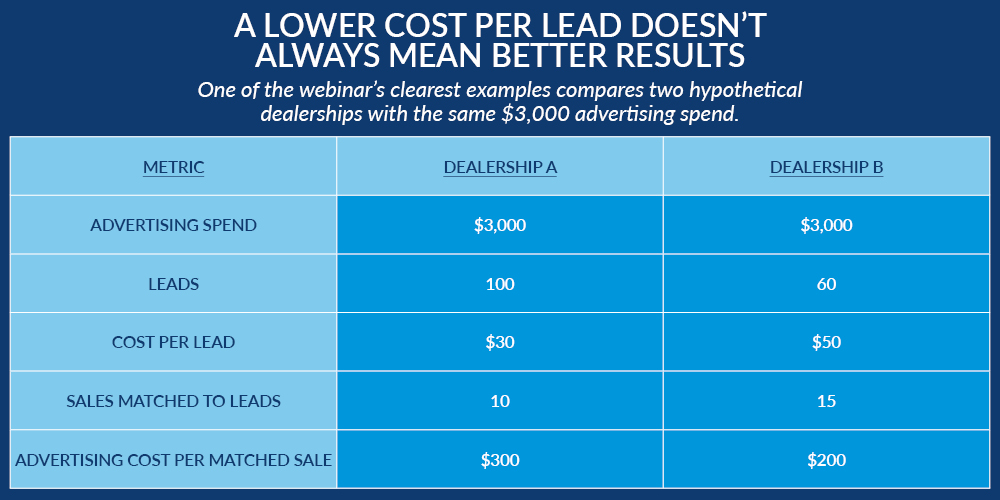
One of the webinar’s clearest examples compares two hypothetical dealerships with the same $3,000 advertising spend.

On the surface, if you just look at leads and cost per lead, Dealership A looks stronger. But Dealership B has more actual sales matched to its leads and that gives it a lower advertising cost per matched sale.

The takeaway: just looking at lead volume and cost per lead may not show you if your marketing is effective, you need more context. Following leads through to sales gives you a more useful basis for evaluating your investment.

Make it easy for interested shoppers to reach you

Even relevant traffic can hit a dead end if your website’s contact tools don’t work.
Frere recommends checking your dealership’s website regularly, especially the actions available on your VDPs. 

Test your click-to-call buttons, confirm the phone numbers are correct, and submit a test for each type of inquiry form. Then make sure that those submissions reach your customer relationship management system, or CRM, and receive timely follow-up.

This is a good place to start when traffic is healthy but leads aren’t keeping up. 

Keep the shopping experience consistent across channels

The webinar also explores how local listings, Google Business Profile posts, paid advertising, and marketplace listings can help shoppers find your inventory.
It’s about consistency. Your dealership’s contact information should be accurate, the vehicles you promote should be available, and links should take shoppers to a relevant destination like a VDP.

Frere also discusses VIN-specific retargeting: showing returning shoppers ads for vehicles they previously viewed. Bringing an interested shopper back to a relevant VDP creates another opportunity for them to contact your dealership.

Across these channels, the goal is the same: help the right shopper find the right vehicle and take a measurable next step.

Three checks for your next marketing meeting

Use these three topics to make your next agency or vendor conversation more productive:
  1. Destination: Where is paid traffic going? Ask to see the ads, the inventory being promoted, and the pages shoppers reach.
  2. Behavior: What do shoppers do after arriving? Look at vehicle views and meaningful contact actions, including calls, forms, and texts.
  3. Sales connection: What evidence connects those inquiries to sales? Review what can be matched through your CRM and dealership management system, or DMS, and ask your provider to explain any reporting gaps.
You should be able to understand the answers in plain English, not marketing speak. A useful report should show you where shoppers came from, what they did on your site, and how that activity connects to your dealership’s results.

Watch the Full Webinar

Ready for a closer look? Watch the full “From Traffic to Sales: Is Your Marketing Driving Buyers?” webinar for more examples and answers to dealers’ questions about connecting marketing activity to leads and sales. 
 

Get a clearer view of your marketing

Watch the full webinar replay above for more examples and answers to dealers’ questions about measuring marketing performance.

Want help applying these checks to your dealership? AutoSweet offers a free digital marketing audit to help you understand what’s working and where there may be opportunities to improve. Click below to get your audit!

Related Blog Posts

Traditional marketing builds dealership awareness, while digital inventory marketing connects high-intent shoppers with the vehicles they’re actively searching for. Learn how the two approaches can work together to drive sales.

Read More »

OEM co-op dollars can help dealerships sell more vehicles—but only if your inventory marketing is aligned with program requirements. Learn how optimized merchandising, compliant listings, and targeted campaigns can help you maximize OEM incentives and avoid leaving money on the table.

Read More »

Customer reviews for car dealerships do more than build your reputation—they influence trust, ad performance, and lead generation. Learn how to turn review insights into smarter inventory marketing and attract more qualified shoppers.

Read More »

The FTC is turning up the heat on automotive advertising, and dealerships should take notice.

Read More »