
Google has recently expanded Local Services Ads to include auto repair shops, creating a new advertising opportunity for eligible dealership service departments. Google Local Services Ads for dealerships could offer a new way to reach high-intent service customers while paying for leads instead of clicks.
The biggest difference between Local Services Ads and regular Google Ads is that instead of paying every time someone clicks your ad, you only pay for the leads you receive.
That makes Google Local Services Ads an attractive option for dealers looking to grow and attract new service customers. But like any new advertising opportunity, evaluating whether you should use Local Services Ads also means asking yourself where it fits into your overall marketing strategy.
What Are Google Local Services Ads?
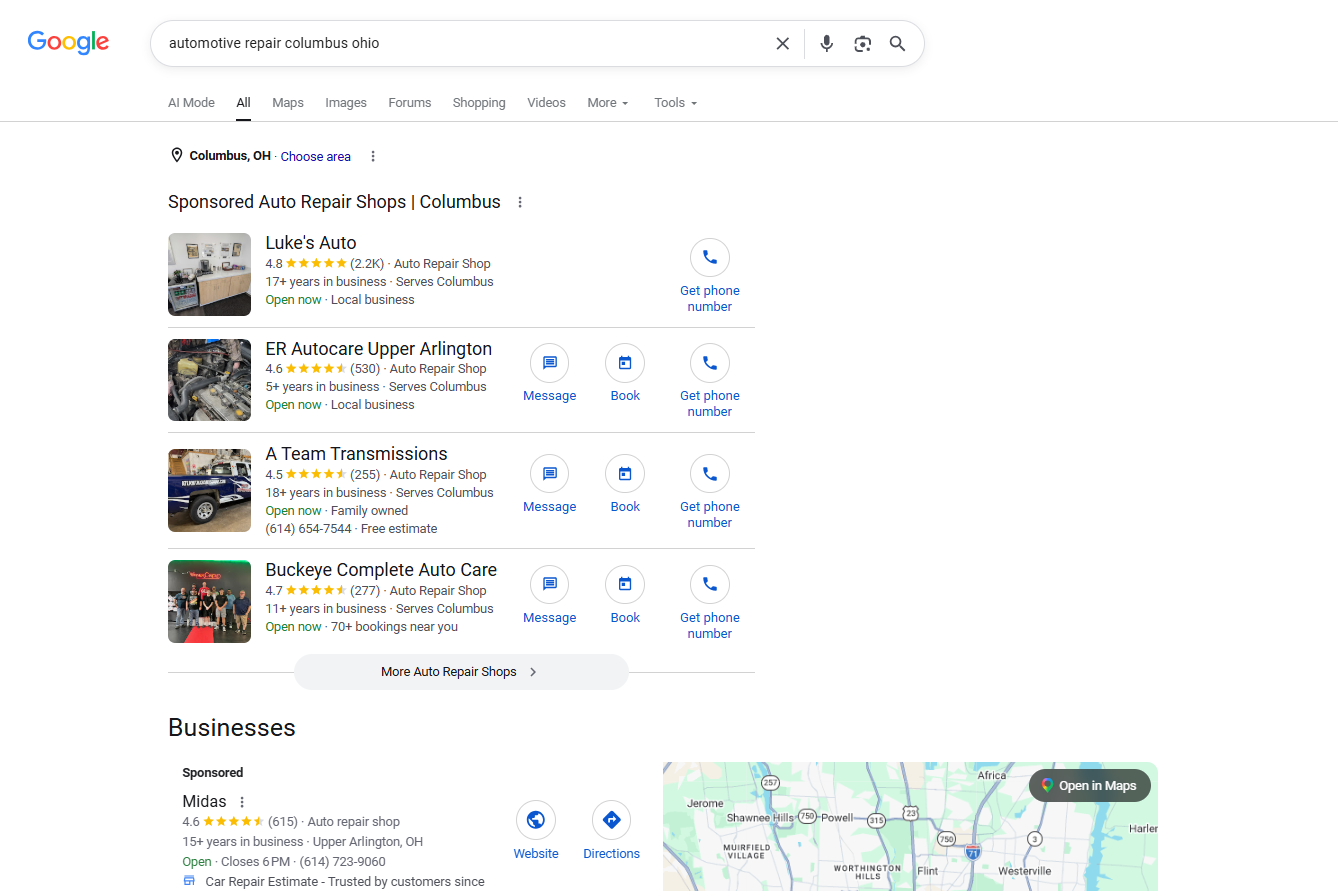
Local Services Ads, or LSAs, are designed to connect consumers with nearby businesses when they’re actively searching for a particular service.
Google has expanded eligibility to automotive categories, including auto repair shops. For dealerships, that means eligible service departments have a new opportunity to appear in front of high-intent local customers.
Think about the searches happening in your market every day:
“Auto repair near me.”
“Brake repair near me.”
“Mechanic near me.”
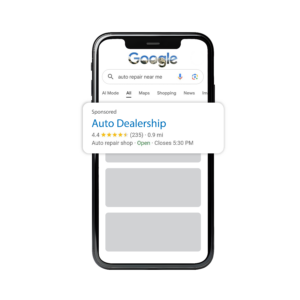
Customers conducting searches like this have immediate needs – they have a problem they want solved soon. And Local Services Ads are designed to put local providers in front of those consumers at the moment of need.
THE BIG DIFFERENCE: YOU PAY FOR LEADS, NOT CLICKS
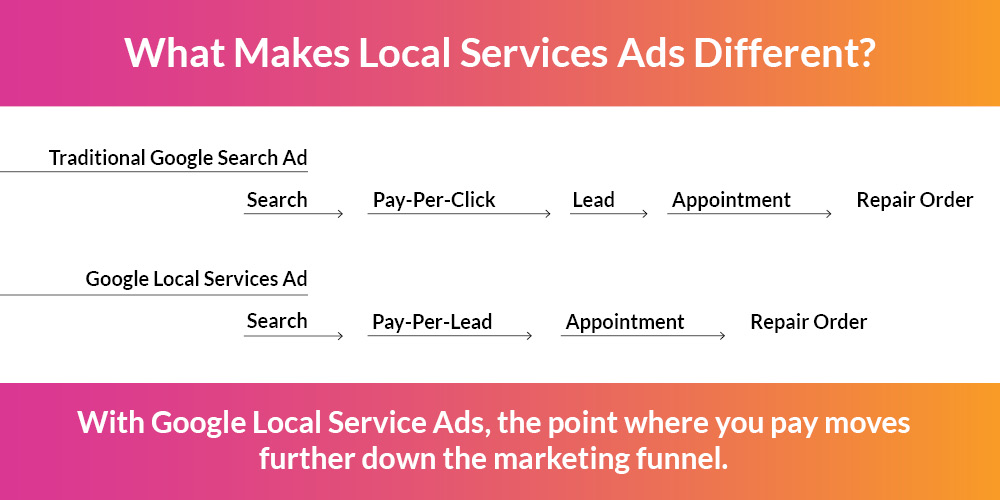
A traditional Google Search uses a pay-per-click model, meaning that dealers pay Google when someone clicks your ad even if that customer doesn’t turn into a lead with a call or email.
Local Services Ads work differently: Dealers pay for valid leads generated through the ad, such as qualifying phone calls and messages. Lead pricing can vary based on factors such as location, service type, lead type, and bidding strategy.
That doesn’t mean every lead will turn into a repair order. But it does move the point where you pay further down the funnel. For dealers focused on measurable marketing results, that’s an important distinction.
Why Local service ads Are a Good Tactic for Service Departments
Service marketing is fundamentally different from vehicle marketing.
Someone considering a new car may research the purchase for weeks or even months. But someone whose check-engine light just came on has a much shorter decision window.
Local Services Ads give dealership service departments another way to reach consumers who are actively searching for help—and potentially bring new customers into the dealership.
A consumer searching for “auto repair near me” may have purchased their vehicle somewhere else, recently moved to the area, or simply be looking for a more convenient or trusted place to have their vehicle serviced. And dealerships already have an advantage with many of these shoppers: About a third of customers say they prefer dealership service centers to general repair shops.
That first service visit can also be the beginning of a much longer customer relationship. Studies show that buyers who return to the dealership for service are nearly twice as likely to purchase their next vehicle from the same dealer.
That makes service an important tool for both customer acquisition and retention. A great service experience can lead to repeat repair business, future vehicle purchases, and referrals to friends and family.
LSAs give dealers another way to turn high-intent local repair searches into relationships that can deliver value well beyond the first repair order.
Should Your Dealership Jump In?
Our recommendation? Local Services Ads are worth testing, but don’t jump in blindly.
They may be a good fit if your dealership wants to grow customer-pay service business, wants to attract service customers beyond existing owners and has a process for tracking leads through appointments and repair orders
That last point is especially important.
Pay-per-lead is not the same thing as pay-per-sale, or in this case, pay-per-repair order.
A campaign generating 50 leads may look great in a dashboard. But if only a handful turn into appointments, or your dealership doesn’t know what happened to those leads, you still don’t know whether the advertising worked. Tracking is essential.
The Key: Measure What Happens After the Lead
Don’t evaluate Local Services Ads based on lead volume alone. Dealers should ask:
How many leads became appointments?
How many appointments became repair orders?
What was our cost per repair order?
How much service revenue did those customers generate?
How many were new customers?
There’s an even bigger question:
Did those customers come back?
A new service customer can be worth considerably more than a single repair order. If a Local Services Ad introduces someone to your dealership and that person becomes a repeat service customer—or eventually purchases their next vehicle from you—the value of that original lead looks very different.
That’s why connecting advertising activity to actual dealership outcomes matters. Measurement matters.
Finding the Right Marketing Mix
Local Services Ads shouldn’t automatically replace your existing Google advertising.
They solve a specific problem: capturing high-intent local service demand.
Search campaigns, Local Services Ads, your Google Business Profile, SEO, reviews, remarketing, and other channels can each play a different role in helping customers find and choose your service department.
Dealers shouldn’t necessarily try every new advertising product Google releases, but they should evaluate and understand which channels reach the right customers at the right moment, and which ones actually produce results.
At AutoSweet, we help dealerships build smarter digital marketing strategies and measure what’s actually driving business.
Google Local Services Ads give dealership service departments another way to reach customers at a critical moment in the buying journey. The opportunity is worth exploring, but the dealers that get the most from it will be the ones that test it, track it, and understand what happens after the lead comes in.
Make Google Work Harder for Your Dealership
Local Services Ads are just one piece of a much larger Google advertising ecosystem. The key is knowing which opportunities make sense for your dealership, and how they fit together.
AutoSweet helps dealerships build and manage Google Ads strategies designed to reach the right customers, make smarter use of their advertising dollars, and drive measurable results.
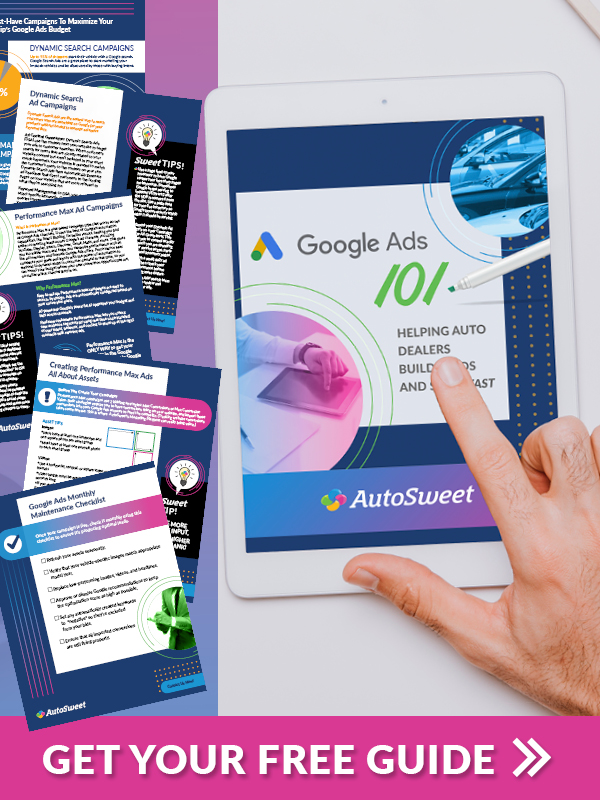
To learn more about how Google advertising works for dealerships, download AutoSweet’s free Google Ads 101 eBook.
Inside, you’ll learn about the different types of Google advertising available to dealerships and best practices for generating more qualified leads.



 AutoSweet
