
TL;DR: If you’re asking, “How do I get more serious shoppers to convert online?” or “What’s the best way to increase high-intent traffic?” the answer is simple: drive people straight to your Vehicle Detail Pages (VDPs). That’s where shoppers make real decisions. Homepages and search results pages (SRPs) are useful for browsing, but they don’t convert buyers like VDPs do.
How Do I Get More High-Intent Traffic for My Dealership? (Send people to VDPs)
The Problem
Most dealers send traffic to their homepage or generic inventory pages because it feels like the natural starting point. The problem is that this doesn’t match how serious shoppers behave online.
When someone clicks on an individual car’s ad, say, a 2021 Ford F-150, they are already low-funnel buyers. They’ve moved past casual browsing; they are actively considering that specific vehicle. Sending them to a homepage or search results page interrupts their intent. Every extra click or step between the ad and the VDP introduces friction, increasing the chance they’ll bounce or go to a competitor.
Low-funnel shoppers need a direct path to the exact vehicle they clicked on. Traffic that doesn’t land on VDPs is lost opportunity and wasted ad spend.
How to Solve it
Align your marketing with buyer behavior. Buyers shop by vehicle, not website section. Sending them directly to VDPs removes friction and takes them to the “moment of intent.” AutoSweet is built around this movement. We drive shoppers to the right vehicle, not just the website.
Why Do Vehicle Detail Pages Convert Better Than Homepages?
What VDPs actually do
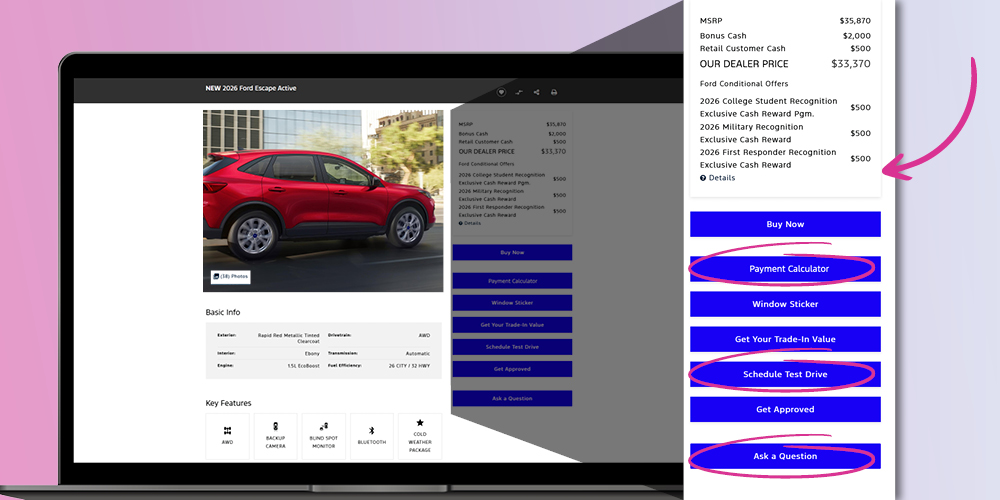
VDPs answer the biggest “How do I…” questions car shoppers ask:
- How do I see real photos of the car?
- How do I check features and packages?
- How do I know if this price is good?
- How do I contact someone right now?
A homepage cannot answer any of these questions without extra steps.
Why shoppers behave this way
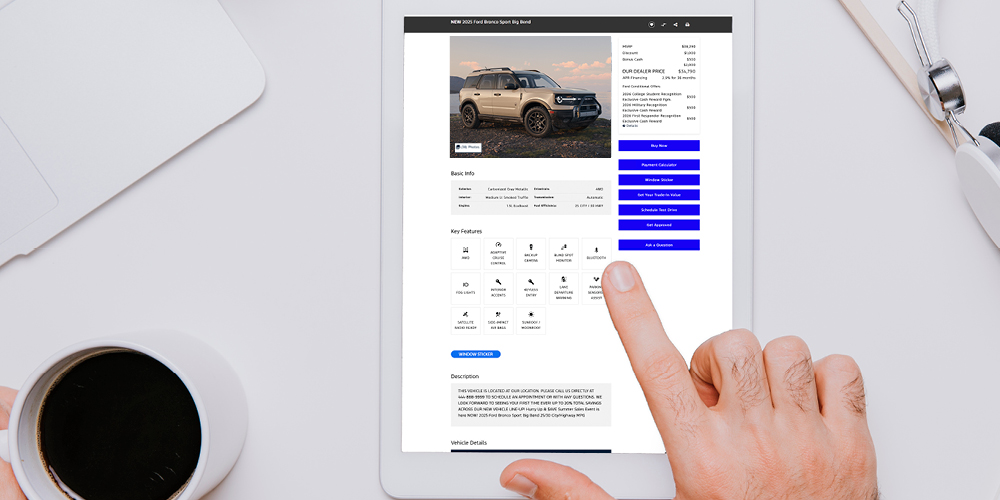
Most retail browsing, whether online or in-store, starts with a product. A VDP is the digital version of standing next to a car and opening the door. It offers clarity: photos, price, features, store info, and a clear next step.
What this means for conversions
VDPs aren’t “nice to have.” They’re critical, and they’re designed for action. Always ensure each VDP includes:
- Call/Chat buttons
- Test-drive scheduling
- Price breakdowns
- Payment calculators
The closer the shopper is to the vehicle, the better they convert.
Is VDP Traffic a Better Indicator of Buying Intent? (Yes.)
What VDP views tell you
When shoppers visit a VDP, they’re signaling intent. They want to know about a specific unit, not just browse around.
Why dealers track VDP metrics
VDP views correlate with:
- Higher lead quality
- More test drives
- Faster inventory turns
- Lower marketing waste
If you’re looking for “signals that matter,” VDPs beat homepage visits every time.
How AutoSweet helps
Our platform automatically routes ads, SEO traffic, and social clicks directly to the right VDPs based on shopper behavior. You’re not paying for generic clicks—you’re connecting buyers to exact vehicles in real time.
Which Performs Better: Homepage Traffic or VDP Traffic?
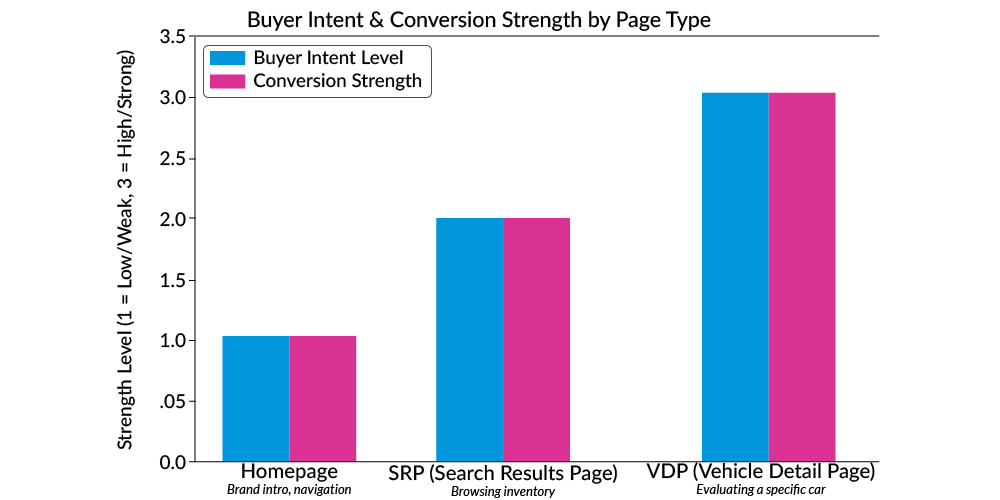
This is why your best-performing ads almost always point directly to VDPs. They capture the shopper at the highest-intent moment.
The Best Way to Improve My Google Ads and Social Ads? Link to VDPs.
The relevance problem
When an ad doesn’t match the page it links to, Google sees it as less relevant. That causes your Quality Score – Google’s measure of ad relevance and usefulness – to drop, and your CPC (Cost Per Click) – the amount you pay each time someone clicks your ad – to go up. On top of that, shoppers are more likely to leave without taking action.
The VDP advantage
Sending shoppers directly to Vehicle Detail Pages (VDPs) has multiple benefits that go beyond simply getting more clicks. Here’s why it works:
Matches ad intent
When a shopper clicks on an ad for a specific vehicle, they expect to see that exact car. Landing on the VDP ensures the ad delivers exactly what the shopper was looking for, reinforcing trust and keeping their attention.
Improves relevance
Google and other advertising platforms prioritize ads that lead to relevant content. By linking directly to VDPs, your campaigns appear more relevant to both the shopper and the platform. This can help your ads perform better in search results and social feeds.
Lowers cost per click (CPC)
When ads are more relevant, platforms reward them with higher Quality Scores, which often reduces the amount you pay for each click. Direct VDP links ensure your marketing dollars are spent efficiently on buyers who are ready to take action.
Keeps shoppers focused
VDPs remove distractions that can occur on a homepage or inventory list. Shoppers see exactly what they want and have clear next steps—like scheduling a test drive or contacting a salesperson—without hunting for information.
Highlights the exact unit you want to sell
VDPs give each vehicle its own “moment in the spotlight.” You can showcase the car’s features, photos, pricing, and any promotions. This focus helps sell the inventory you want to move first, especially for aging units.
AutoSweet’s Approach
AutoSweet is designed to make every marketing dollar count by connecting shoppers directly to the vehicles they’re most interested in.
Dynamic VIN-Level Ads Across Platforms
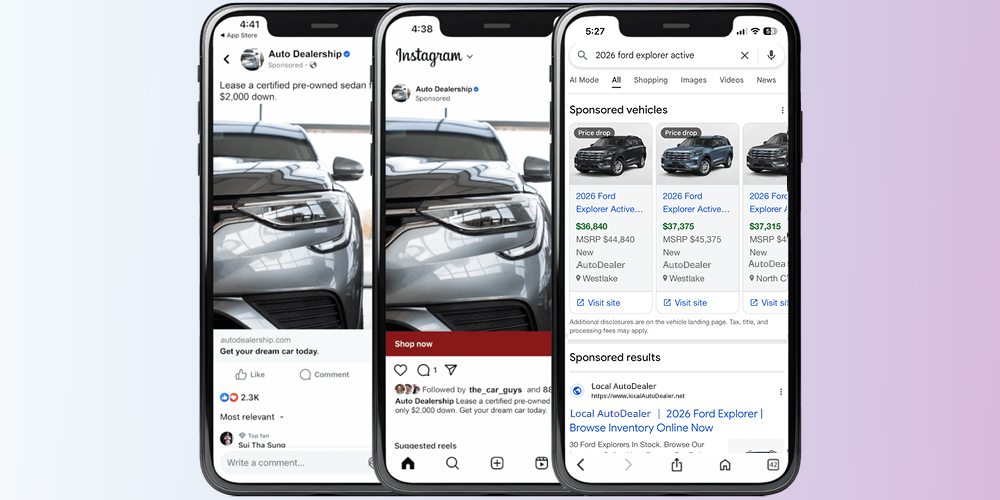
Our platform dynamically creates ads tied to each individual VIN in your inventory. That means every vehicle gets its own ad showing the right photos, pricing, and key features. Shoppers see exactly what they clicked on in your ad, which keeps engagement high and builds trust.
These ads are deployed across multiple channels, including:
- Google Ads (Search, Display, and YouTube)
- Facebook & Instagram Ads
- Marketplace platforms (like Meta Marketplace and automotive listing sites)
Traffic Routed Straight to VDPs
Instead of sending shoppers to a generic homepage or search results page, AutoSweet routes every click directly to the corresponding Vehicle Detail Page (VDP). This reduces friction, keeps low-funnel buyers focused, and maximizes the chance that interest turns into a test drive or lead.
Full Inventory Visibility
Every car on your lot gets exposure—not just new arrivals or popular models. AutoSweet ensures older or slower-moving inventory still reaches the right buyers, helping you move cars faster and reduce holding costs.
Optimized Ad Spend
By connecting each ad to a specific VDP, campaigns perform more efficiently. Shoppers are less likely to bounce, ad relevance improves, Google Quality Scores increase, and Cost Per Click (CPC) goes down—so your marketing budget works harder.
Simplified Campaign Management
Dealers don’t have to manually create separate ads for every vehicle. AutoSweet automates ad creation and distribution at scale across Google, Facebook, Instagram, and Marketplace. Every ad is optimized to meet buyer intent, ensuring your marketing drives real results.
FAQs
We get a number of questions from dealers about why VDPs are important, including:
“How do I know if I’m getting enough VDP views?”
If a vehicle isn’t getting consistent weekly VDP traffic, it’s not being seen. Traffic is the first indicator, not leads.
“Is it bad to build homepage traffic?”
No. It’s just not where sales happen. Homepages introduce your brand. VDPs sell the car.
“What’s the best way to increase VDP traffic fast?”
Use ad campaigns that point directly to individual vehicles. Tools like AutoSweet’s Automated Inventory Marketing (AIM) platform do this for you quickly and easily using automation and leveraging your DMS.
Bottom Line
If you’re looking for a clear, no-fluff answer to “How do I get more serious shoppers to convert?” it starts with one move: Send people to VDPs.
It’s the most direct path from shopper interest to a real sales opportunity, and AutoSweet is built to make that path simple, automatic, and effective.
Want to learn more about how AutoSweet helps clients drive traffic and sales for less?
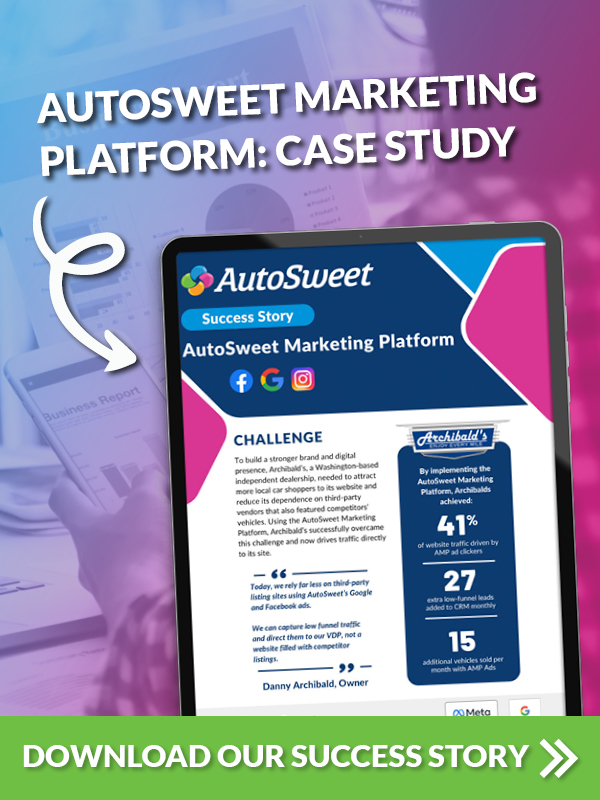
Download our free case study showing how one dealer saw a 41% increase in web traffic by using inventory ads that linked directly to VPDs, targeting local shoppers across multiple online channels.