
The TL;DR:
If you want your dealership to rank higher on Google Maps, focus on three things you can control: fully optimize your Google Business Profile, keep your inventory consistent and visible across the web, and build steady engagement through reviews and updates. Dealerships that do this consistently show up in search more often and get more high-intent buyers.
When shoppers search “dealership near me,” the results they see first get the clicks and the traffic. If your dealership isn’t showing up in the top spots on Google Maps, you’re missing buyers who are already in-market and ready to act.
The good news is this isn’t random. Google Maps rankings are driven by clear signals. Once you understand them, you can improve your position.
How Google Decides Who Ranks
Google uses three main factors to rank businesses in search: relevance, distance, and prominence.
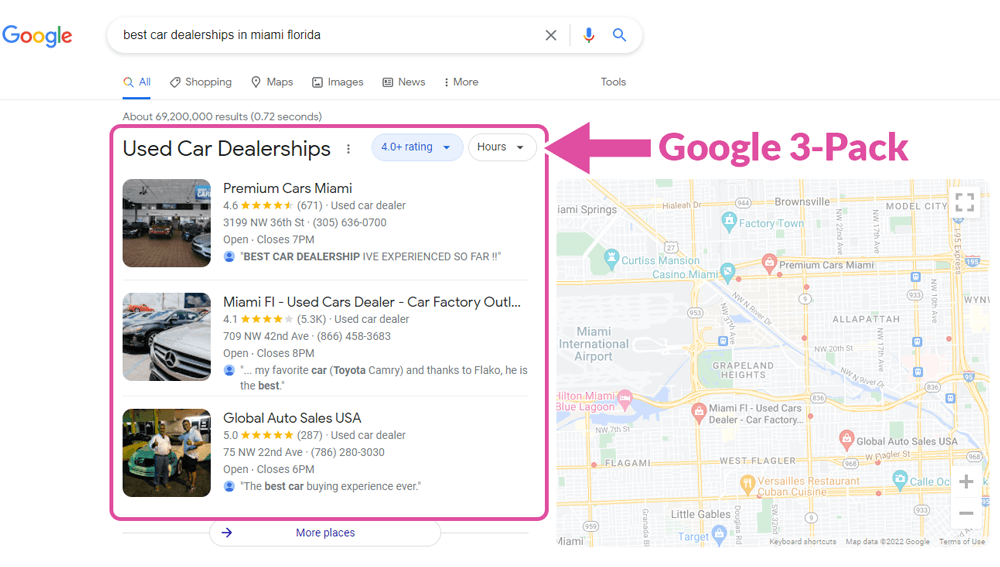
Google shows these results at the top of the search engine results page (SERPs) in groups of three. That’s known as the Google 3-Pack.
If you want to be in a customer’s consideration, you need to be in that 3-Pack.
Distance is out of your control. But relevance (how well you match a search) and prominence (how trusted and active your business appears) are where you can win.
Everything that follows ladders up to strengthening those two signals.
Start With Your Google Business Profile
Your Google Business Profile is the foundation of your Maps visibility. If it’s incomplete, outdated, or inconsistent, you’re starting at a disadvantage. We’ve got a great guide to maximize your GBP here.
Make sure your categories are accurate, your description clearly explains what you offer, and your hours and contact details are always up to date. Also, photos matter more than most dealers think. Fresh, high-quality images of your lot and inventory help build both trust and engagement.
Your Google Business Profile isn’t a one-time setup. It’s something you should maintain regularly.
Make Your Inventory Easy for Google to Understand
This is where many dealerships can lose ground.
Google is trying to connect shoppers with specific vehicles, not just businesses. If your inventory isn’t clear, consistent, and easy to find across your website and other platforms, you become harder to match to real searches.
If a shopper searches for a specific make, model, or feature and your inventory:
- isn’t clearly structured
- doesn’t match across channels
- or isn’t updated regularly
…Google is less likely to surface your dealership in a search.
Dealers who win here treat inventory like content: Structured, consistent, and visible everywhere it needs to be.
Bonus tip: When advertising, be sure you’re linking your ads directly to your VDPs, not just to your dealership homepage.
Build Trust Through Reviews
Reviews are one of the strongest signals of prominence for Google. But it’s not just about having a lot of reviews, it’s about having a steady flow of them.
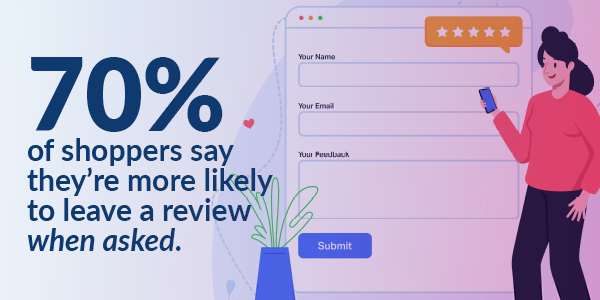
Google favors businesses that are actively getting feedback and engaging with customers. That means you need to ask your customers for reviews, then respond to them consistently.
A dealership with 500 reviews from three years ago looks less relevant than one getting new reviews every week. Recency signals that you’re active and trusted right now—not just historically. That’s why it’s critical to manage your reputation online. Bonus tip: Beyond helping your search rankings, Research indicates that customers are willing to spend 31% more on a business with excellent reviews.
Stay Active With Posts and Updates
Most dealerships claim their Google Business Profile and then leave it untouched. That’s a missed opportunity.
Google rewards activity. Posting updates to your profile – whether it’s new inventory, monthly specials, or dealership news – reinforces that your business is engaged and current.
It doesn’t need to be complicated. Consistency matters more than perfection.
Your Website Still Matters
Your Google Maps presence is closely tied to your website. If your site is slow, outdated, or inconsistent with your profile, it can drag down your visibility.
Google’s search engines assess your content looking for experience, expertise, authoritativeness and trust, something they call, something they call E-E-A-T. Your location, inventory, and messaging should all match across your website and online postings.
Beyond this, your site should also load quickly, work well on mobile, and clearly show what inventory you have available.
Think of your website as the proof behind your listing.
Strengthen Your Local Presence
Google also looks beyond your own properties to understand your reputation locally.
Consistent listings in directories, mentions on local websites, and links from community organizations all reinforce your credibility. These signals tell Google that your dealership is established and relevant in your market.
The stronger your local footprint, the easier it is to climb.
The Bottom Line
Climbing higher on Google Maps isn’t about one trick. It’s about consistency across everything a shopper—and Google—can see.
The dealerships that rank at the top aren’t guessing. They’re:
- keeping their profiles accurate and active
- making their inventory easy to find and understand
- building steady engagement over time
Do that well, and you don’t just show up. You show up first.
Want to Show Up First?
If your dealership isn’t ranking where it should, your inventory and digital presence may not be working together.
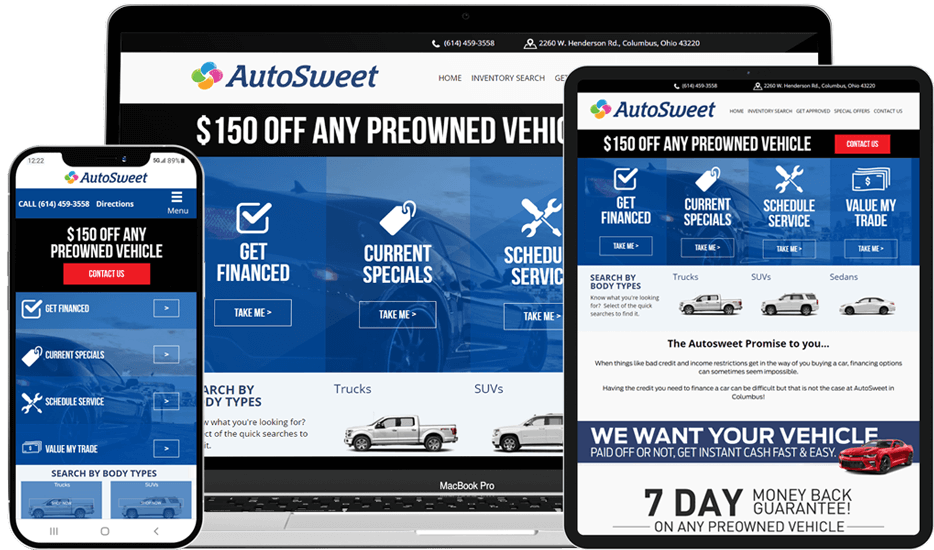
AutoSweet helps dealers get their inventory found earlier in the buyer journey, so when shoppers search, your vehicles (and your dealership) show up.Download our free ebook “Google Ads 101” and find out how two critical Google Ads campaigns can drive leads right to your dealership! It’s time to shift gears and steer success back into your own hands.