
The TL;DR:
Google began rolling out Vehicle Feeds on Search Ads (VFSA) in June 2026, allowing dealerships to display live vehicle inventory directly within Google Search ads (like “Ford dealer near me”).
The new format combines traditional search advertising with an inventory-driven experience, helping shoppers browse vehicles before they even click. More importantly, it reinforces a trend that’s reshaping automotive advertising: Inventory is becoming the ad creative.
Inventory Is the New Creative
Google’s newest automotive advertising feature may be one of its most significant in years.
Vehicle Feeds on Search Ads (VFSA), which began rolling out in June 2026, allow dealerships to supplement traditional Google Search ads with live inventory pulled directly from their vehicle feed.
Instead of showing only headlines and ad copy, Google can now display vehicle photos, pricing, model information, and other inventory details directly alongside search ads.
For shoppers, it’s a richer experience. For dealerships, it’s another signal that automotive advertising is becoming increasingly inventory-driven.
And for dealers who have spent years optimizing promotions and ad copy, it reinforces an important reality:
Inventory is becoming the ad.
What Are Vehicle Feeds on Search Ads?
Vehicle Feeds on Search Ads (VFSA) allow dealerships to attach live vehicle inventory to traditional Google Search campaigns.
Using inventory data from an approved Google Merchant Center vehicle feed, Google can enhance search ads with information such as:
- Vehicle photos
- Year, make, and model
- Pricing information
- Mileage
- Availability
- Additional vehicle details
The result is a more engaging search experience that allows shoppers to see actual vehicles before clicking through to a dealership website.
Think of it as combining the intent of traditional Google Search with the visual inventory experience consumers have come to expect when shopping online.
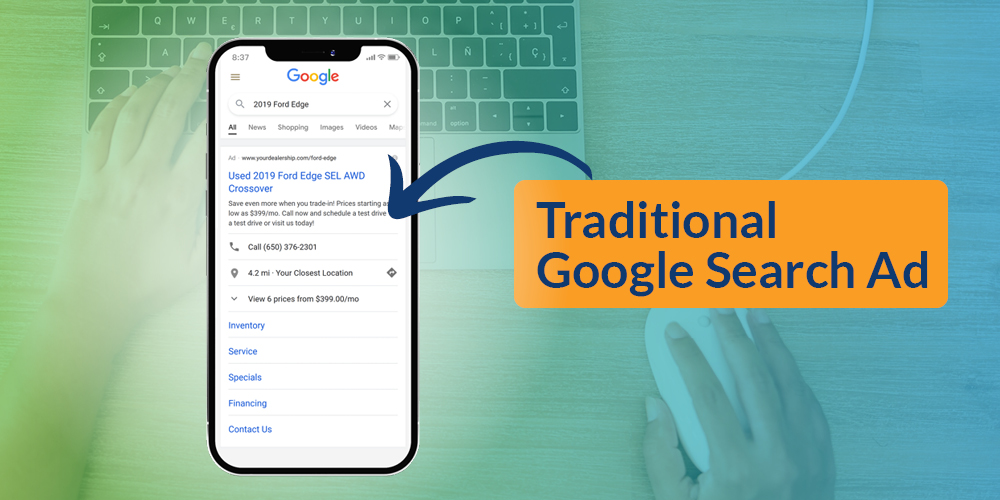
How Vehicle Feeds on Search Ads Work
When shoppers perform vehicle-related searches, Google determines what inventory information would be helpful.
For example:
- New Ford F-150 for sale near me
- 2026 Ford Escape deals
- Used Toyota Camry Dallas TX
- Honda CR-V lease offers
When eligible inventory is available, Google can combine a dealership’s search ad with vehicles from its inventory feed.
In some cases, shoppers may see a swipeable inventory experience featuring multiple vehicles (and their photos) directly within the search results page.
Rather than simply reading an advertisement, consumers can begin browsing available inventory immediately.
It’s important to note that Vehicle Feeds on Search Ads do not replace Vehicle Listing Ads (VLAs). Instead, they extend inventory visibility into traditional search campaigns, creating another opportunity to connect with in-market shoppers.
Why Google Is Introducing VFSA
Google’s mission has always been to connect consumers with the most relevant information as quickly as possible.
Today’s vehicle shoppers don’t just want dealership advertisements. They want to know what inventory iss available, how much it costs, what it looks like, and if it’s near them.
Vehicle Feeds on Search Ads help answer those questions earlier in the buying journey.
By surfacing inventory directly within Google Search, dealers can provide shoppers with more useful information while potentially generating higher-quality traffic.
The move also aligns with larger trends across search, e-commerce, and artificial intelligence. Consumers increasingly expect personalized, inventory-rich experiences that help them make decisions faster.
The Bigger Story: The Vehicle Is Becoming the Creative
For years, AutoSweet has built its inventory marketing strategy around a simple belief: shoppers care more about the vehicle than the marketing message surrounding it.
Google’s rollout of Vehicle Feeds on Search Ads is another step in that direction. By displaying actual vehicles—including photos, pricing, and availability—directly within search ads, Google is putting the vehicle itself at the center of the advertising experience.
Long before Vehicle Feeds on Search Ads, AutoSweet was helping dealerships put inventory at the center of their digital marketing strategy through solutions like:
- Facebook Automotive Inventory Ads (AIAs)
- Google Vehicle Listing Ads (VLAs)
- Craigslist inventory syndication
- Dynamic inventory advertising across multiple channels
Historically, automotive advertising relied heavily on promotional messaging like “Biggest Sale of the Year,” “Memorial Day Sales Event,” “Huge Savings,” or “Shop Now.”
Those promotions still have value. But today’s shoppers increasingly want to see actual vehicles, actual pricing, and actual availability before they click.
That’s why the most effective automotive marketing connects shoppers with inventory as quickly as possible.
A shopper searching for a truck, SUV, or sedan is often more interested in:
- Whether it’s available
- What it costs
- What it looks like
- What features it includes
In many cases, the vehicle itself becomes the most important creative asset in the campaign.
Google’s rollout of Vehicle Feeds on Search Ads reinforces what we’ve believed all along: the dealerships that make inventory visible, accurate, and easy to shop will be best positioned to win as automotive advertising continues to evolve.
Why Inventory Data Matters More Than Ever
As Google expands its inventory-powered advertising formats, the quality of a dealer’s inventory becomes even more important.
Inventory marketing only works when the underlying data is accurate. That’s why AutoSweet has always prioritized tight integration with dealership DMS platforms, ensuring vehicle details, pricing, availability, incentives, and merchandising remain aligned across channels. (Recently, this has become even more important.)
As inventory-driven advertising becomes more common, dealers can no longer treat inventory feeds as an afterthought. The quality of the data powering those ads directly impacts performance.
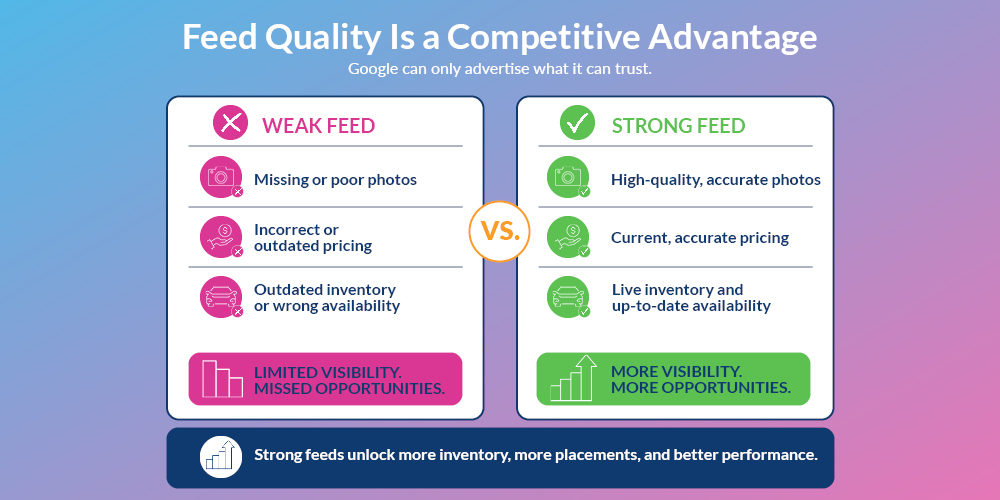
Poor inventory data can create problems like:
- Incorrect pricing
- Missing vehicle photos
- Outdated inventory
- Inaccurate vehicle descriptions
- Inconsistent customer experiences
Dealerships with strong inventory feeds are better positioned to take advantage of emerging advertising opportunities.
As Google continues shifting toward inventory-first advertising, feed quality is becoming a competitive advantage—not just an operational necessity.
Dealers should regularly review:
- Vehicle photos
- Pricing accuracy
- Vehicle descriptions
- Availability status
- Google Merchant Center feed health
The stronger the inventory feed, the stronger the foundation for future advertising success.
What Dealers Should Do Now
Even if you’re not actively managing Vehicle Feeds on Search Ads today, there are steps you can take immediately.
- Evaluate the quality of your vehicle inventory feed. Make sure pricing, photos, vehicle details, and availability are accurate and updated consistently.
- Review how inventory is syndicated across your marketing channels. Shoppers expect consistent information whether they find you through Google Search, Vehicle Listing Ads, social media advertising, third-party marketplaces, or your dealership website. They all have to be in alignment; in fact, Google will flag your merchant feed if the pricing and offers don’t match what’s listed on your website.
- Think beyond advertising campaigns and focus on inventory marketing as a strategy.
The dealerships that treat inventory data as a marketing asset will benefit most from Google’s next gen ad experiences.
How AutoSweet Helps Dealers Take Advantage of VFSA
AutoSweet has been helping dealerships market inventory long before Google introduced Vehicle Feeds on Search Ads.
Our approach has always centered on making inventory more visible, more accurate, and more consistent across every digital touchpoint. Whether through Facebook Automotive Inventory Ads, Google Vehicle Listing Ads, inventory syndication, dynamic remarketing, or marketplace integrations, we’ve spent years helping dealers turn inventory into their most effective marketing asset.
VFSA is just the latest example of the industry moving in the same direction.
The good news is that dealerships don’t necessarily need to launch entirely new campaigns to use it.
For dealers with approved inventory feeds connected to Google Ads, VFSA is available within existing eligible search campaigns.
At AutoSweet, many of our inventory-powered Google Ads campaigns are already positioned to take advantage of this new format because inventory feeds are already integrated into the advertising strategy. All of AutoSweet’s new and prior campaigns are eligible to serve these ads, as long as we have an approved inventory feed with Google.
That’s the value of building a strong inventory marketing foundation.
Our inventory marketing solutions help dealerships:
- Promote inventory across multiple digital channels
- Maintain consistent vehicle information across platforms
- Connect inventory data to Google advertising campaigns
- Improve inventory visibility throughout the buying journey
- Measure which marketing efforts influence vehicle sales
As Google continues expanding inventory-powered advertising, dealerships with clean inventory data and strong feed management will be better positioned to capitalize on new opportunities.
Frequently Asked Questions About Vehicle Feeds on Search Ads
What are Vehicle Feeds on Search Ads?
Vehicle Feeds on Search Ads (VFSA) allow Google to show vehicles from your inventory directly within search ads. Instead of seeing only text, shoppers may see vehicle photos, pricing, and other inventory details while searching.
How is this different from Vehicle Listing Ads?
Vehicle Listing Ads (VLAs) typically appear in Google’s vehicle shopping experiences. Vehicle Feeds on Search Ads bring inventory into traditional Google Search ads, giving shoppers another way to discover your vehicles.
Do I need a vehicle feed to use VFSA?
Yes. Google pulls vehicle information directly from your inventory feed, so dealerships need an approved inventory feed connected to Google.
Do I need to create new Google Ads campaigns?
Not necessarily. If your inventory feed is already connected to Google Ads, your existing search campaigns may already be eligible to display Vehicle Feeds on Search Ads.
What information can shoppers see?
Depending on the search, shoppers may see vehicle photos, pricing, mileage, availability, and other key vehicle details directly within the search ad.
When will I start seeing these ads?
Google began rolling out Vehicle Feeds on Search Ads in June 2026. Availability may vary by dealership and campaign setup.
How can I tell if my dealership is eligible?
The easiest way is to ask your marketing provider or Google Ads partner. Eligibility generally depends on having an approved inventory feed connected to Google Ads and running eligible search campaigns.
Has Your Agency Talked to You About VFSAs Yet?
Vehicle Feeds on Search Ads are the latest example of how Google continues to evolve automotive advertising.
Google started rolling out this feature in June 2026. Has your agency discussed it with you? More importantly, are your campaigns positioned to take advantage of it?
As Google’s advertising ecosystem becomes increasingly inventory-driven, dealerships need partners who understand both Google Ads and inventory marketing.
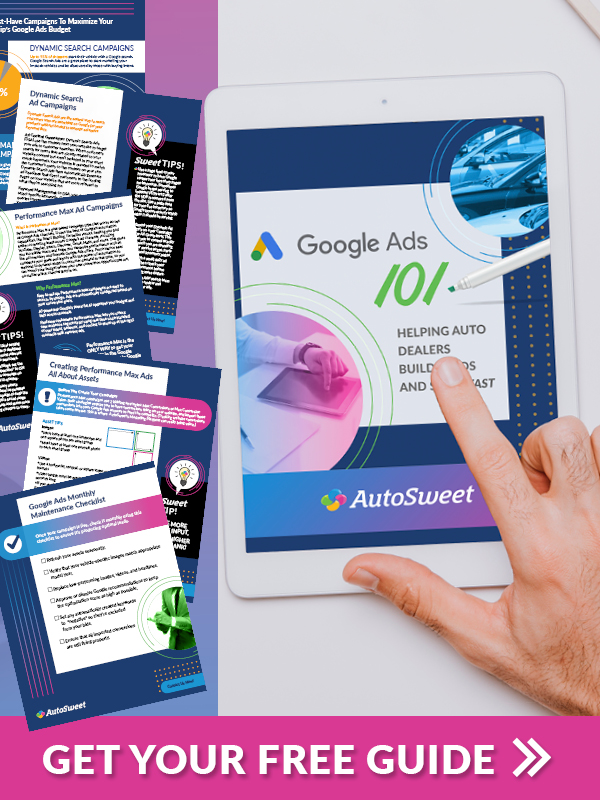
To learn more about how Google advertising works for dealerships, download AutoSweet’s free Google Ads 101 eBook.
Inside, you’ll learn about the different types of Google advertising available to dealerships and best practices for generating more qualified leads.
It’s a great first step to building a stronger Google advertising strategy today.