
Not all leads are created equal online: Some shoppers are just browsing, while others are ready to take action.
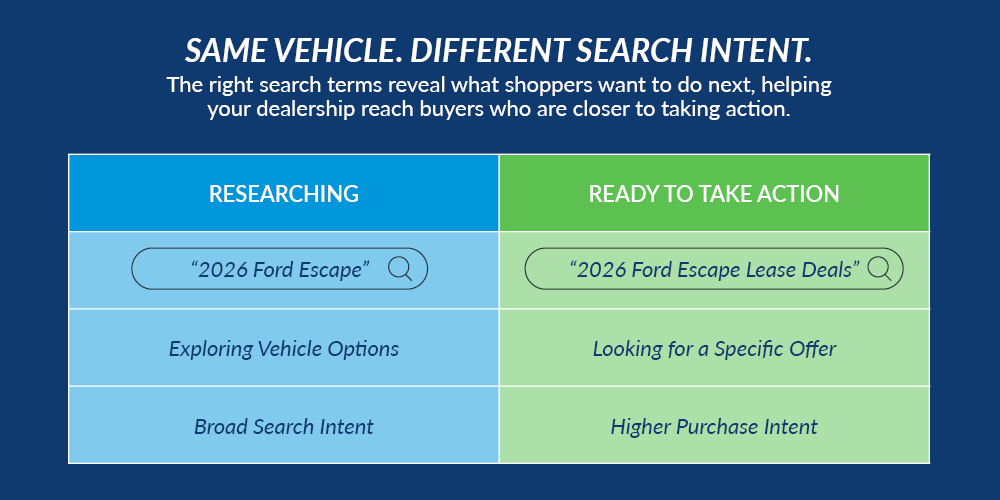
You can see the difference between them by looking at a shopper’s internet search terms. Someone searching “2026 Ford Escape” may still be researching vehicles.
Someone searching “2026 Ford Escape lease deals” is telling you much more about what they want to do next.
The same is true for searches like “trade in my car near me” or “bad credit car financing.” These shoppers have a specific need and are probably much closer to taking action.
This information is more than just interesting, understanding it is critical to your ad strategy. Your ads need to show up for searches that actually matter.
Moving From Keywords to Intent
When running Google Ads, it’s common to focus your campaign on broad, high-volume keywords like:
- “cars for sale”
- “dealership near me”
- “2026 Ford Escape”
These searches can drive traffic, but traffic alone isn’t the goal.
High-performing campaigns should also focus on intent-based search terms, searches that give you clues about what a shopper wants to do next.
A shopper looking for a specific lease deal has different needs than someone researching a model. A customer searching for a trade-in value has different needs than someone browsing used inventory.
Understanding those differences can help you put the right message in front of the right shopper.
Let’s back up a minute – what if you don’t know what shoppers are searching to find your dealership? You don’t have to guess.
Google Ads includes a tool called the Search Terms Report that shows the actual searches people used before seeing or clicking your ads.
To find it, sign in to your Google Ads account, open Insights and reports, and select Search terms. Depending on your account layout, you may also find it under Campaigns, Search keywords, Search terms.
The report can help you answer questions like:
- Are shoppers finding your ads when they search for specific vehicles or offers?
- Are you attracting people looking for financing, trade-ins or service?
- Are you paying for clicks from searches that aren’t relevant to your dealership?
Keep in mind that Google doesn’t show every individual search in this report, but it provides a useful starting point for understanding what brings shoppers to your ads.
Not managing your own Google Ads? Ask your marketing team or agency to walk you through your Search Terms Report. It’s a good way to start a conversation about whether your advertising is reaching the right customers.
4 High-Intent Search Categories Dealers Should Own
1. New Vehicle Searches: Shoppers Moving Toward a Decision
There’s a big difference between someone searching for a vehicle and someone searching for a specific opportunity to buy or lease it.
Consider these searches:
- “2026 Ford Escape”
- “2026 Ford Escape lease deals”
- “2026 Ford Escape for sale near me”
- “2026 Ford Escape financing offers”
The first search could come from someone who is just beginning to research the vehicle. The others give stronger clues that the shopper is considering a purchase or lease.
For franchise dealerships, this distinction is especially important. Someone searching for “2026 Ford Escape lease deals” is probably much closer to visiting a dealership than someone who’s just researching the model.
This idea applies across makes and models. Searches for specific vehicles combined with terms like “lease specials,” “financing offers” or “available near me” help dealerships identify shoppers who are further along in the buying process.
Here’s what works:
- Campaigns built around specific makes, models and offers
- Ad copy that matches what the shopper is looking for
- Current pricing, lease or financing messaging when applicable
- Landing pages that take shoppers directly to relevant inventory or offers
Your goal isn’t just to show up when someone searches for a vehicle. Your goal is to reach shoppers whose searches suggest they’re ready to take the next step.
2. Financing Searches: Buyers Who Need a Solution
Let’s consider what searches like this indicate:
- “car financing near me”
- “bad credit car loan”
- “0% financing deals”
These aren’t casual searches. They’re problem-solving searches.
These shoppers likely already know they want a vehicle. Now they’re trying to figure out how to afford it and which dealership will offer the best deal.
Here’s what works:
- Ads that highlight available financing options
- Messaging focused on flexibility and a simple process
- Website landing pages focused on financing (rather than sending every shopper to inventory)
When the search is about financing, your message and destination should address financing, too.
3. Trade-In Searches: High-Value Opportunities
What about searches like:
- “value my trade”
- “trade in my car”
- “how much is my car worth”
These shoppers already own a vehicle and are considering what to do next. That can be a strong signal that a future purchase is on their mind.
Getting in front of these shoppers early gives your dealership an opportunity to become part of that next step.
Here’s what works:
- Easy-to-use trade value tools
- Clear explanations of your trade-in process
- Strong calls to action
- A simple path from valuation to available inventory
4. Service Searches: Your Next Sales Pipeline
Searches like:
- “oil change near me”
- “brake service cost”
- “car service dealership”
At first glance, these may look like fixed operations opportunities. But service customers can also become future sales customers.
A service customer is actively maintaining a vehicle and building a relationship with a dealership. Over time, that customer may need a major repair, begin considering a replacement vehicle or simply decide it is time for something new.
Winning a service visit today helps build a relationship that leads to a vehicle sale later.
Here’s what works:
- Easy online booking
- Local targeting
- Service-specific offers and messaging
- Follow-up strategies that keep customers engaged with the dealership
Why Dealers Miss High-Intent Opportunities
The problem isn’t that you aren’t running enough ads. It’s that a dealer’s digital ad campaigns aren’t always structured around what shoppers are trying to accomplish.
Common issues include:
- Too many broad keywords
- Generic ad messaging
- Sending different types of searches to the same page
- Little connection between the search term and the offer
- Focusing on traffic volume instead of shopper intent
AI-assisted tools (like Google Ads’ AI-assisted copy generating tool) can help advertisers create ad copy, but they don’t always recognize the specific intent behind a customer’s search. An automatically generated headline might promote a particular vehicle without highlighting the lease deal or financing offer the shopper is actually looking for.
That’s why identifying high-intent searches and developing relevant messaging still requires a thoughtful strategy, not just automation.
When the search, message and destination don’t match, you create extra work for the shopper.
Someone searching for a lease deal should not have to dig through your website to find current offers. Someone looking to value a trade should not land on a generic inventory page.
Make the next step obvious.
Why Technology Alone Isn’t Enough
Google Ads offers tools that can help advertisers build campaigns, including AI-assisted features that suggest ad copy based on website content.
But generating ad copy isn’t the same as understanding what a shopper intends to do.
An automated suggestion might describe a vehicle or promote a dealership without addressing the specific reason someone is searching.
That’s why identifying high-intent search opportunities still requires a thoughtful strategy. Dealers need to consider what their customers are searching for, which searches are most likely to lead to meaningful actions and how to match those searches with relevant messaging.
Technology can help build and manage campaigns, but understanding customer intent is what makes those campaigns more effective.
Match Search, Message and Experience
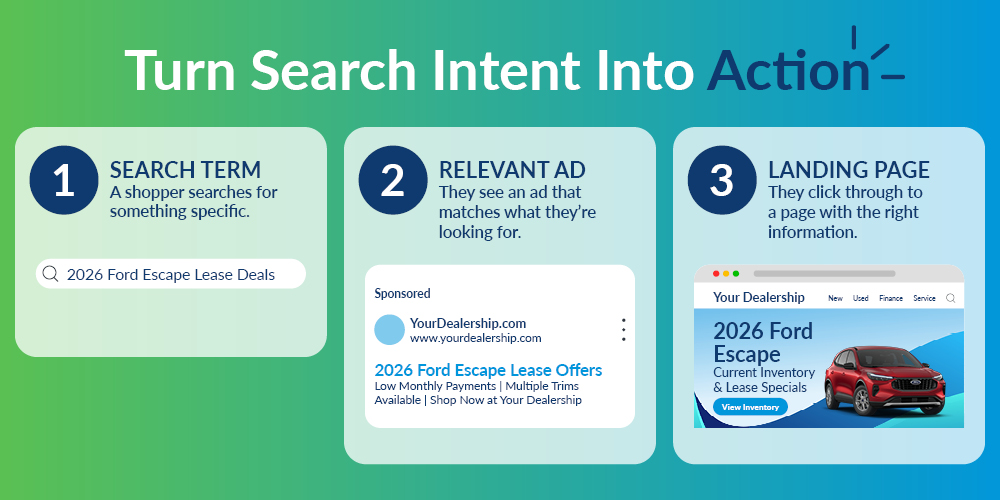
A strong Google Ads strategy creates a clear path from what a shopper searches for, to the ad they see, to the page they visit after clicking. Google recommends matching ad messaging and landing pages to what customers are searching for, making it easier for shoppers to find relevant information and take action.
Here are four examples of how dealerships can match their advertising to customer intent.
1. New Vehicle Search: “2026 Ford Escape lease deals”
- Ad: Highlight relevant Ford Escape lease offers.
- Landing page: Direct shoppers to current Escape inventory and applicable lease specials.
2. Financing Search: “Bad credit car financing”
- Ad: Highlight available financing options.
- Landing page: Direct shoppers to information about financing and how to apply.
3. Trade-In Search: “Trade in my car”
- Ad: Encourage shoppers to find out what their vehicle is worth.
- Landing page: Direct shoppers to a trade-in valuation tool or appraisal page.
4. Service Search: “Oil change near me”
- Ad: Highlight available oil change services or specials.
- Landing page: Direct shoppers to online service scheduling.
The closer the experience matches what the shopper searched for, the easier it is for that person to take the next step.
What Happens When You Get It Right
Campaigns built around high-intent searches can help dealerships generate:
- More qualified traffic and leads
- Better conversion opportunities
- More efficient use of advertising dollars
- A clearer picture of which searches are producing meaningful customer actions
Instead of measuring success by clicks alone, you can focus on whether your advertising is reaching shoppers who are ready to do something.
How AutoSweet Helps You Capture High-Intent Shoppers
At AutoSweet, we don’t just run Google Ads. We build campaigns around real customer intent.
That means looking beyond broad keywords and automated recommendations to understand what shoppers are actually trying to accomplish.
We help dealerships identify high-value search terms, structure campaigns around different types of shopper intent and create ad messaging that connects directly to what customers are searching for.
We also focus on what happens after the click, directing shoppers to relevant inventory, offers or tools that make it easy to take the next step.
Our goal is simple: We help dealerships spend less of their advertising budget on traffic that goes nowhere and more of it reaching shoppers who are ready to take action.
Make Google Work Harder for Your Dealership
High-intent search is one part of a larger Google advertising strategy. The key is knowing which opportunities make sense for your dealership and how they work together.
Want to learn more about how Google advertising can help your dealership reach the right shoppers?
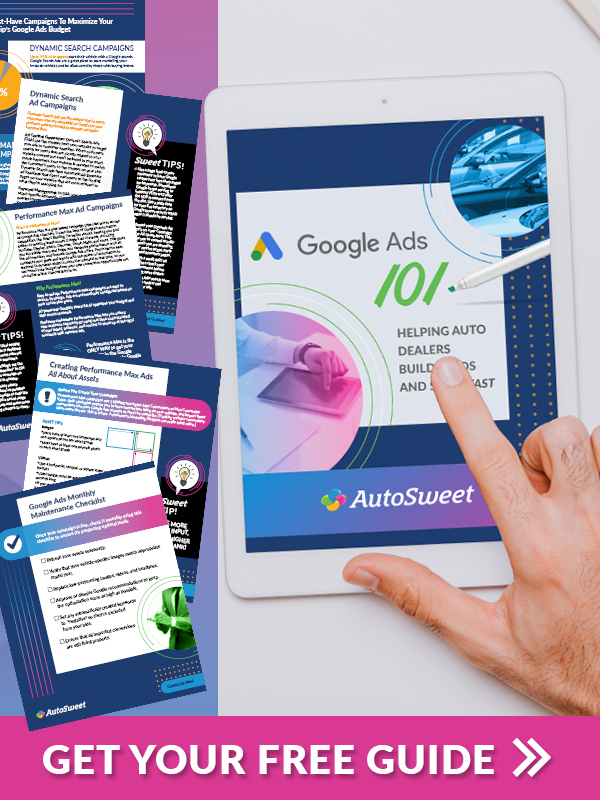
Download AutoSweet’s free Google Ads 101 eBook.
Inside, you’ll learn about the different types of Google advertising available to dealerships and best practices for generating more qualified leads.