
The FTC is turning up the heat on automotive advertising, and dealerships should take notice. On March 13, the Federal Trade Commission (FTC) sent warning letters to 97 dealerships over potential violations tied to deceptive vehicle pricing practices. The message was clear: regulators are paying closer attention to how dealers advertise pricing online, and inconsistent or misleading pricing can quickly become a problem.
The FTC specifically called out practices like:
- Advertising prices that don’t include required fees
- Promoting rebates or discounts not available to every customer
- Failing to disclose required down payments
- Conditioning pricing on dealer financing
- Requiring add-ons not reflected in the advertised price
- Advertising vehicles that aren’t actually available
And here’s the real challenge for dealers: pricing today lives everywhere.
Your inventory shows up on your website, Google Vehicle Listings, AutoTrader, Cars.com, paid ads, social media, email campaigns, and more. If pricing is inconsistent across those channels — or if disclosures don’t match — consumers notice immediately. Increasingly, regulators do too.
An Operational Problem
Most pricing issues don’t happen because dealers are intentionally trying to mislead customers.
They happen because modern inventory marketing is messy.
Prices change constantly. Incentives update overnight. Vehicles sell. Rebates expire. Different platforms pull data differently. And when multiple vendors or systems are involved, it’s easy for pricing and disclosures to get out of sync.
That’s why this FTC push matters so much. Dealers can no longer think about compliance as something handled only by legal teams or disclaimer language buried on a landing page.
The actual advertising workflow matters now.
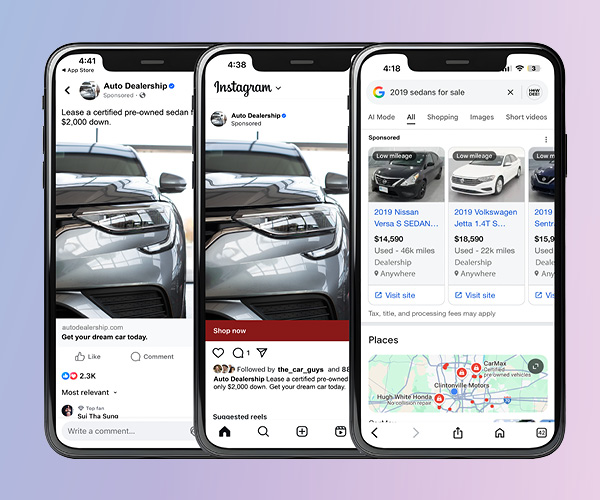
The Biggest Risk Area: Conditional Pricing
One of the FTC’s biggest concerns right now is conditional pricing, showing a headline price that includes incentives most shoppers don’t actually qualify for.
Things like:
- Military rebates
- Loyalty rebates
- Conquest offers
- Trade assistance
- Financing incentives
Those offers aren’t necessarily the problem. The problem is when they’re baked into the main advertised price without clearly separating what’s available to everyone versus what requires qualifications.
The FTC’s broader position is basically this: the ad itself shouldn’t create a misleading takeaway.
If a customer sees a price online and later discovers it required financing, trade equity, loyalty status, or several stacked incentives they didn’t qualify for, regulators increasingly view that as a transparency issue.

Why Centralized Pricing Matters More Than Ever
This is where operational consistency becomes critical.
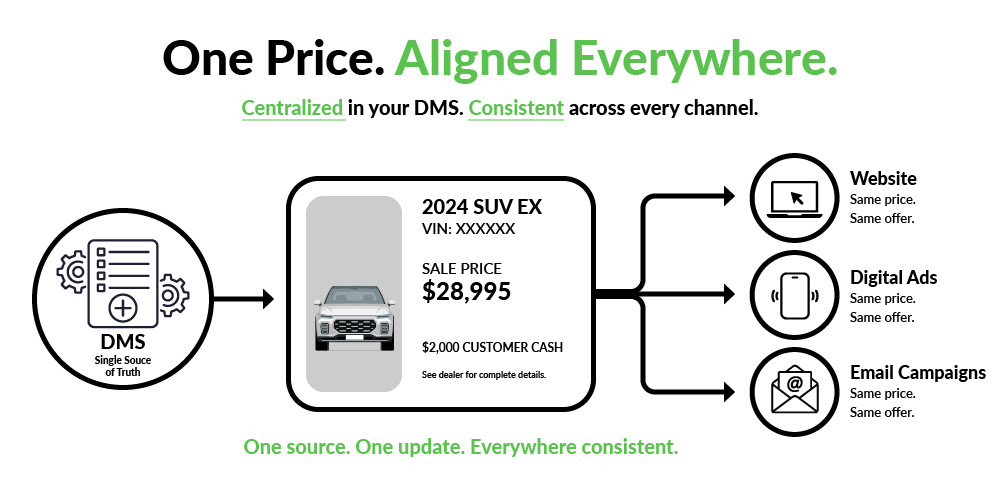
Dealers need pricing and offers flowing from a centralized source of truth (typically the DMS or inventory management system) so updates happen consistently across every advertising channel.
When pricing is updated manually in multiple places, problems happen fast:
- Old offers stay live
- Sold inventory remains advertised
- Different platforms show different prices
- Conditional rebates accidentally get stacked into advertised pricing
- Disclosures become inconsistent across channels
Automated inventory syndication and centralized offer management help reduce those risks by keeping pricing, incentives, and disclosures aligned across platforms.
Speed Matters Too
Another thing dealers sometimes overlook: timing matters.
A lot of compliance exposure comes from outdated information sitting live online:
- Expired incentives
- Old rebates
- Vehicles already sold
- Changed pricing not reflected everywhere yet
The faster dealers can update and synchronize pricing across channels, the lower the risk of inconsistencies creating consumer confusion.
That’s why more dealers are looking for systems that can automatically update inventory, pricing, and offers across channels from a single source of truth.
Inventory Accuracy Is Part of the Conversation
The FTC also specifically called out “ghost inventory”, which is the practice of advertising vehicles that are unavailable or nonexistent.
Again, this is often more operational than intentional.
Inventory changes rapidly, especially in today’s market. If third-party listings, paid ads, and website inventory aren’t syncing frequently, outdated vehicles can stay live long after they’re gone.
That creates frustration for consumers and potential scrutiny for dealers.
Frequent inventory synchronization and automated publishing workflows help reduce those issues while creating a more trustworthy shopping experience overall.
What Dealers Should Do Now
The FTC’s warning letters are a signal that pricing transparency is becoming a bigger priority across automotive retail.
Now is the time to:
- Audit pricing across all advertising channels
- Review how conditional incentives are displayed
- Ensure required fees are clearly disclosed
- Verify inventory accuracy
- Strengthen pricing governance and inventory synchronization processes
While legal counsel should always guide compliance decisions, dealerships should also evaluate the operational systems and marketing partners responsible for publishing inventory and pricing across digital channels.
After all, most pricing inconsistencies don’t start in the legal department—they start somewhere in the inventory marketing process.
Why Your Inventory Marketing Partner Matters
Today’s dealership pricing appears in dozens of places simultaneously, from your website and Google Vehicle Listings to AutoTrader, Cars.com, Facebook Marketplace, paid search campaigns, display advertising, and email marketing.
That means the systems responsible for publishing inventory, offers, and pricing have become an important part of maintaining advertising consistency.
Dealers should be asking questions like:
- Where does our advertised pricing originate?
- How often is inventory updated?
- How are incentives and rebates managed?
- Can we distinguish between offers available to everyone and conditional incentives?
- How quickly can we update expired offers?
- Are disclosures consistent across channels?
These questions don’t just affect compliance, they also affect customer trust.
At AutoSweet, we’ve spent 20 years helping dealerships manage inventory marketing at scale. Our platform connects directly with dealership inventory and DMS systems to help ensure pricing, vehicle availability, and offers remain synchronized across digital channels.
With AutoSweet’s platform, dealers can manage offers and disclosures from a centralized location and publish updates consistently across websites, email marketing, social media, and advertising campaigns. Our inventory syndication technology helps reduce the risk of stale pricing, outdated incentives, and inventory discrepancies, while our pricing tools allow dealerships to clearly separate universally available offers from conditional incentives.
No technology can guarantee compliance. But the right processes, systems, and partners can help dealerships improve pricing transparency, maintain consistency across channels, and reduce the risk of misleading advertising.
The Bottom Line
The FTC’s warning letters aren’t just a compliance story—they’re a reminder that inventory marketing has become increasingly complex.
Every vehicle, price change, incentive update, disclosure, and inventory adjustment must be managed across a growing network of websites, marketplaces, and advertising platforms.
Dealers who invest in centralized inventory management, synchronized pricing, and consistent offer publishing will be better positioned to reduce risk, build consumer trust, and compete effectively in an increasingly transparent marketplace.
At AutoSweet, helping dealers maintain accurate, transparent, and consistent inventory marketing across every channel is what we do.
Regulatory scrutiny is increasing, but so is the opportunity to improve your inventory marketing strategy.
Download our free guide, The Dealer’s Playbook for Driving High-Quality Website Traffic with Inventory Marketing, and learn how our inventory marketing systems not only help safeguard your business, but drive leads and sales.